By the Always Beyond Team
Always Beyond is a Calgary-based, employee-owned managed IT services provider for growing businesses across Alberta.
Last updated: November 2026
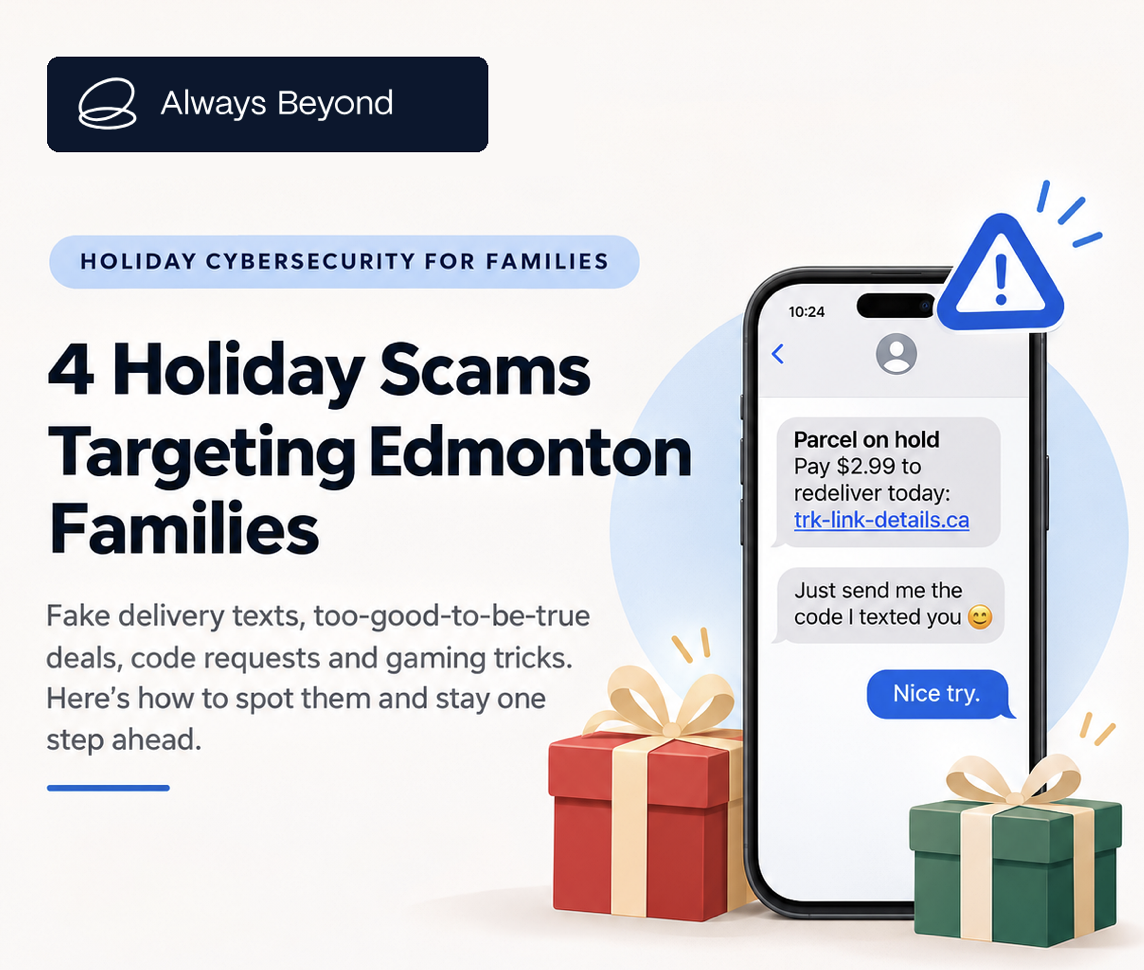
Holiday shopping brings plenty of messages: delivery updates, order confirmations and special offers. Most are legitimate, but some are designed to look familiar so you click before checking. Here are four common scams Edmonton families may encounter and a few practical ways to recognize them.
At Always Beyond, we provide managed IT services in Edmonton and across Alberta, helping businesses protect their systems and information. Many of the same simple security habits are useful at home, too. You do not need to be a technology expert to shop and browse more confidently this season.
1. The fake delivery text
A message appears to come from a delivery company, with a tracking number, a link and a small redelivery fee. Some fake messages lead to websites designed to collect payment details or personal information.
If you are expecting a parcel, check its status through the retailer’s app or the carrier’s official website rather than following an unexpected link. Delivery companies may send legitimate updates, so verify the request independently before paying.
2. The online store with a deal that's too perfect
Some fraudulent online stores use professional-looking product photos and advertisements. Before buying from an unfamiliar retailer, check its contact information, return policy, independent reviews and whether the price seems unusually low.
Be cautious if a seller insists on payment by gift card, cryptocurrency or an unexpected e-transfer. Where possible, use a payment method with purchase protection, such as a credit card, and keep your order confirmation.
3. The Marketplace verification code trick
A buyer or seller on an online marketplace may ask you to share a verification code sent to your phone. That code may actually be part of an account sign-in or password-reset process.
Never share one-time sign-in or verification codes with another person. Arrange exchanges in a well-lit public location, follow the platform’s safety guidance and be wary of requests to refund an overpayment.
4. The gaming scam aimed at your kids
In games and online chats, someone may offer free in-game currency, exclusive items or gifts in exchange for a login, verification code or payment information. These offers can be difficult for younger players to assess.
Talk with your children about keeping passwords and codes private, even when a request appears to come from a friend. Enable purchase approvals and review privacy settings together so they know when to ask for help.
The habits that stop all four
Enable multi-factor authentication on important accounts, especially email and banking. Use unique passwords, keep devices updated and take a moment to check unexpected requests before responding.
If you think you have shared payment or account information, contact your financial institution or the relevant service provider promptly. You can also report suspected fraud to the Canadian Anti-Fraud Centre. Taking action early can help limit potential harm.
A useful habit for the holiday season is simple: when a message asks you to act urgently, pause and verify it through a trusted source. A few extra seconds can make online shopping safer for the whole family.