An Insurance Checklist for Prairie Families Buying Their First Home

Buying your first home comes with a long to-do list. Mortgage approval, inspections, lawyers, moving trucks, and the hunt for a reliable daycare nearby can push insurance to the bottom of the pile. Then, a week before possession, your lender asks for proof of coverage and you realize you are not sure what to buy.
This checklist is for families in Alberta, Saskatchewan, and Manitoba who are buying their first house or condo. It covers what to sort out, what to ask, and where first-time buyers often get caught off guard.
Start early, before possession day
Your lender will want proof of home insurance before it releases mortgage funds. Leaving this to the last few days can mean rushed decisions.
Start shopping as soon as your offer becomes firm. Insurers will ask questions about the home that you may need to get from the seller, the listing, or the inspection report, such as:
Year the home was built
Age of the roof, furnace, water heater, and electrical panel
Type of wiring and plumbing
Primary heating source, and whether there is a wood stove or fireplace
Distance to the nearest fire hydrant and fire hall
Whether the basement is finished
Talking to a licensed broker can save time because one conversation can cover several insurers. Prairie brokers such as Cooke Insurance, a family-owned brokerage in Saskatoon, handle home, condo, tenant, and rental property coverage, and can explain the differences between policies in plain terms. Ask any broker you speak with which provinces they are licensed in.
Choosing the right policy
The right policy depends on what you are buying.
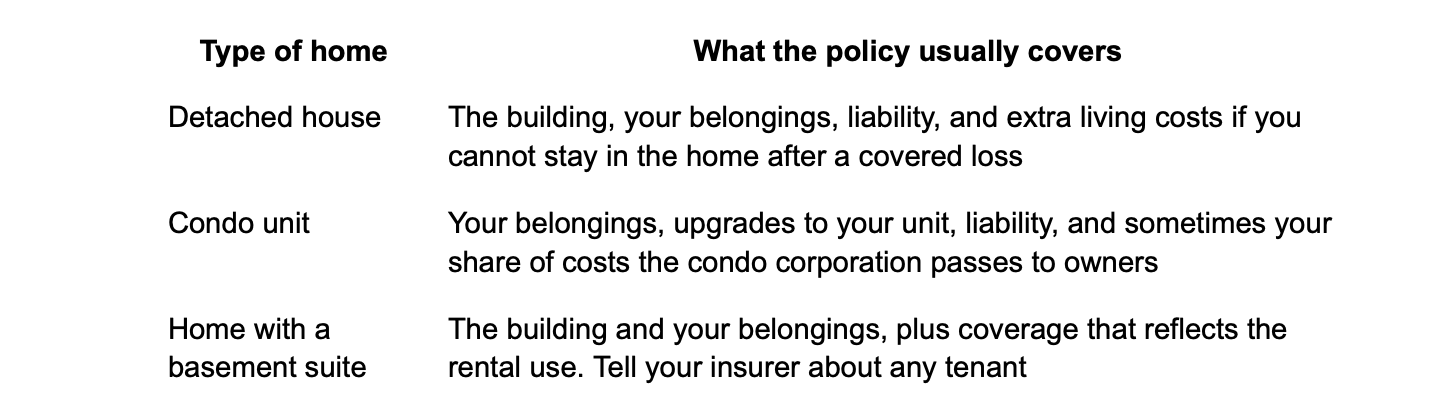
For condos, ask the condominium corporation for its insurance certificate and bylaws. These spell out what the building policy covers and where your own policy needs to pick up.
A few terms show up on almost every home insurance quote.
Replacement cost versus actual cash value. Replacement cost pays to rebuild or replace with similar new materials. Actual cash value subtracts depreciation, which can leave a big gap after a claim. Ask which applies to the building and which applies to your contents.
Comprehensive versus named perils. A comprehensive policy covers all risks except those listed as exclusions. A named perils policy covers only the risks listed. The first is broader. The second may cost less.
Deductible. This is the amount you pay before the insurer pays. A higher deductible lowers your premium, but make sure you could cover it from savings after a loss.
Liability. This pays if someone is hurt on your property or you accidentally damage someone else's property. Families with kids, pets, and backyard guests should think about how much protection they want here.
Add-ons that matter on the prairies
Standard policies do not cover everything. Several optional coverages are worth discussing, especially with prairie weather and older housing stock:
Sewer backup. Often optional. It can be important if the home has a finished basement.
Overland water. Usually sold separately from sewer backup. It deals with water entering from the surface, such as heavy rain or nearby flooding. Availability depends on your location.
Service lines. Covers damage to underground water, sewer, and power lines that you are responsible for on your property.
Higher limits for valuables. Jewellery, bikes, cameras, and some electronics may have low limits under a basic policy.
The Insurance Bureau of Canada has plain-language consumer information on how home insurance works and on protecting your property from severe weather, which is a useful read before you sit down to compare quotes.
Don't confuse these with home insurance
First-time buyers are often offered several products that sound similar but do different things:
Title insurance protects against problems with the legal title, such as liens or survey errors. It does not cover fire or water damage.
Mortgage default insurance is required by lenders when your down payment is under 20 percent. It protects the lender, not you.
Mortgage life or creditor insurance pays down your mortgage if you die or, in some cases, become disabled. Compare it with term life insurance before you sign up.
Home warranties on new builds cover certain construction defects, not everyday accidents or weather damage.
Each of these can have value. Just make sure you know which one is which.
Simple steps after you move in
Once the keys are in hand, a few quick tasks will make any future claim easier:
Make a home inventory. Walk through each room with your phone, recording video and opening closets and drawers.
Store your policy and inventory somewhere you can reach if you cannot get into the house.
Check smoke and carbon monoxide alarms and note the date you tested them.
Learn where your water shut-off valve is. Knowing this can limit damage from a burst pipe.
Tell your insurer about changes, such as renovations, a new basement suite, or a home business.
Review your policy every year, especially after big purchases or life changes like a new baby.
Before you sign
Ask your broker or insurer to walk you through the policy wording, not just the price. Make sure the address, possession date, and mortgage lender are correct on the documents your lawyer receives. A little time spent here means your first home is protected from day one, and you can get back to the fun part: making it yours.