Built for Alberta Winters: What Prairie Homeowners Should Know About New Windows

Alberta winters are hard on windows. Here's how Edmonton and Calgary homeowners can spot failing windows, choose replacements that stand up to the cold, and plan the project.
Anyone who has lived through a January cold snap in Edmonton knows the feeling: you walk past a window and feel the chill before you see the frost. Alberta's climate is one of the toughest in the country for a house. Temperatures can swing from minus thirty to a Chinook thaw in a matter of days, the air is dry for much of the year, and summers bring long, bright days and intense sun.
Windows take the brunt of all of it. Here's what Alberta homeowners should watch for, what to look for in new windows, and how to plan a replacement that makes a real difference.
Why Alberta Is So Hard on Windows
Three things make the Prairies especially demanding:
Extreme cold. Long stretches well below minus twenty mean heat escapes quickly through any weak spot, and windows are usually the weakest spot in the wall.
Rapid temperature swings. Chinooks and sudden cold fronts cause frames and seals to expand and contract repeatedly, which wears them out faster.
Dry air and strong sun. Low humidity and high UV exposure can dry out seals and weatherstripping, fade finishes, and cause some frame materials to become brittle over time.
The result is that windows in Alberta often age faster than the same windows would in a milder climate.
Signs Your Windows Are Past Their Prime
Keep an eye out for these common warning signs:
Frost or ice building up on the inside of the glass on cold mornings
Fog or moisture trapped between the panes, a sign the sealed unit has failed
Drafts around the frame or sash, even when the window is locked
Frames that are cracked, warped or pulling away from the wall
Windows that are hard to open, close or lock
Noticeably higher heating bills from one winter to the next
A little condensation on the coldest days can simply mean indoor humidity is high. But frost that builds up regularly, or moisture between panes, usually means the window is no longer doing its job.
What to Look For in New Windows
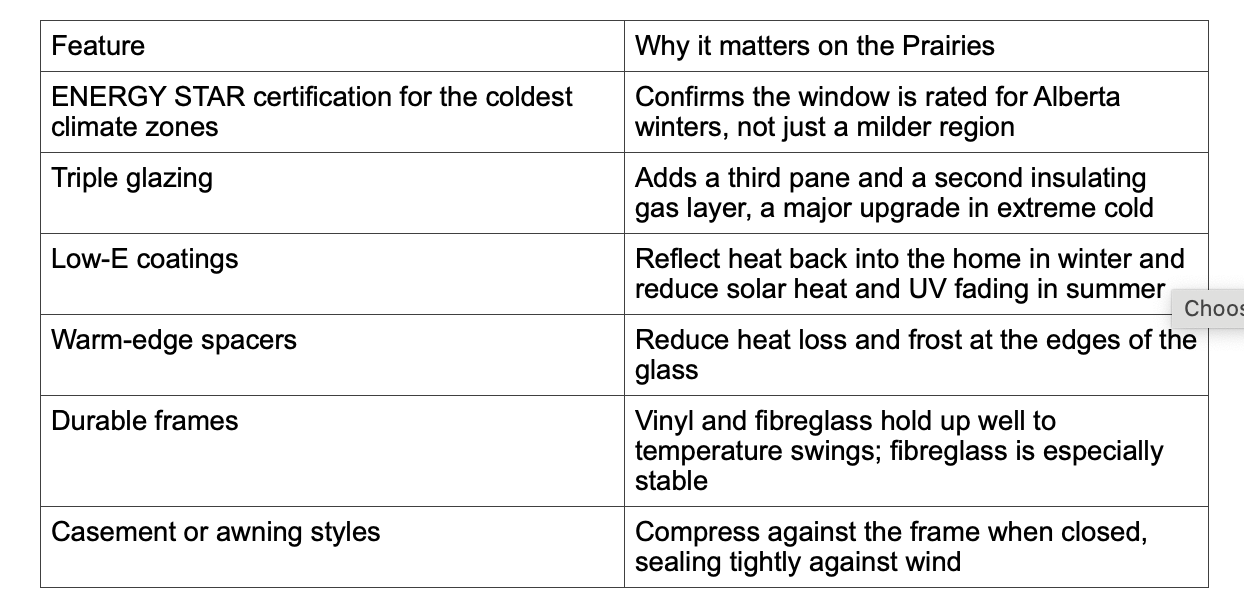
Triple glazing is worth a serious look in Alberta. It costs more upfront than double glazing, but in a climate with long, cold winters, the added comfort near the glass and the reduced heat loss are noticeable every day.
Installation Matters as Much as the Window
Even a top-rated window will underperform if it isn't installed properly. In cold climates, the gap between the window frame and the wall needs to be carefully insulated and sealed, both to stop drafts and to prevent warm, moist indoor air from reaching cold surfaces, where it can condense and cause damage over time.
When comparing installers, ask how they insulate and seal around the frame, whether they offer full-frame replacement when the existing frame is damaged, and what warranty covers both the product and the labour. Homeowners across the province, from Edmonton to the south, can use the same checklist. For example, anyone comparing quotes for window replacement calgary projects will want the same answers on insulation, sealing and warranty.
Timing Your Project in Alberta
Many homeowners prefer to replace windows between late spring and early fall, when the weather is mild and installation is easiest. Planning ahead also means your new windows are in place before the first deep freeze. That said, experienced crews can install windows in winter too, replacing one opening at a time so the rest of the house stays warm.
Looking After Your New Windows
A little maintenance keeps new windows performing for decades:
Clean the tracks and weep holes so water can drain properly
Check and replace worn weatherstripping every few years
Keep indoor humidity moderate in winter to reduce condensation
Lubricate hinges and cranks on casement and awning windows once a year
The Bottom Line
Alberta's climate asks a lot of a home, and windows are on the front line. Knowing the warning signs, choosing windows built for extreme cold, and insisting on careful installation will pay off in a warmer, quieter and more efficient home, through every Chinook and every cold snap.