Family Budgeting Tips When Entertainment Spending Includes Sports and Leisure in Canada
Managing a family budget requires balancing necessities with the activities that bring joy and togetherness. For Canadian families, entertainment spending - from hockey tickets and streaming subscriptions to weekend outings and leisure activities - represents a significant portion of discretionary income. Getting this balance right matters not just for financial health, but for family wellbeing. When everyone understands where money goes and why, it reduces stress and creates space for the experiences that build lasting memories. This guide offers practical strategies for Edmonton families and households across Canada looking to manage their entertainment and leisure spending thoughtfully.
Understanding Your Family's Entertainment Spending
The first step toward better budgeting is understanding where your money currently goes. Statistics Canada reports that the average Canadian household spends approximately $4,200 annually on recreation and entertainment, though this figure varies significantly by region and family size.
For Edmonton families, entertainment costs can include unique regional factors. Winter activities like indoor play centres and swimming pools see higher demand during the long cold months, while summer brings festivals, outdoor sports, and camping expenses. Understanding these seasonal patterns helps families plan ahead rather than react to unexpected costs.
Tracking expenses for one to two months before making changes provides an honest baseline. Many families discover they spend more on entertainment than they realized, particularly when small recurring charges like streaming subscriptions, app purchases, and convenience spending are tallied together.
Creating a Realistic Entertainment Budget
Financial advisors commonly recommend allocating between 5 and 10 percent of after-tax household income to entertainment and recreation. For a household earning $80,000 annually after taxes, this translates to $4,000 to $8,000 per year, or roughly $333 to $667 per month.
The key word is realistic. A budget that eliminates all fun is a budget that will fail. Instead, categorize entertainment spending into tiers. Essential entertainment includes activities that contribute to family bonding and mental health - weekly family movie nights, children's sports registrations, and annual traditions. Flexible entertainment includes dining out, concerts, and spontaneous outings that can be adjusted month to month.
Using the envelope method or a dedicated entertainment account makes spending limits tangible. When the month's entertainment fund is spent, the family knows it is time to enjoy free or low-cost alternatives until the next month begins.
Image by Thomas Reid
Sports Entertainment and Responsible Spending
Sports represent one of the largest entertainment categories for Canadian families. Between league registrations for children, professional game tickets, equipment purchases, and sports media subscriptions, the costs add up quickly. Adults who enjoy following sports may also explore options like the best sportsbooks in canada as part of their personal entertainment budget, which makes it important to treat any such activity as a capped line item rather than an open-ended expense.
The principle of allocation applies regardless of the entertainment type. Whether it is $200 for a family outing to an Oilers game, $50 for a month of streaming services, or a set amount for any adult leisure activity, the budget should define the limit before the spending begins. This approach prevents any single category from crowding out others and ensures that family entertainment remains balanced and enjoyable for everyone.
Sample Monthly Entertainment Budget for a Family of Four
This sample budget demonstrates how a family earning $6,500 monthly after taxes might allocate entertainment spending across different categories.
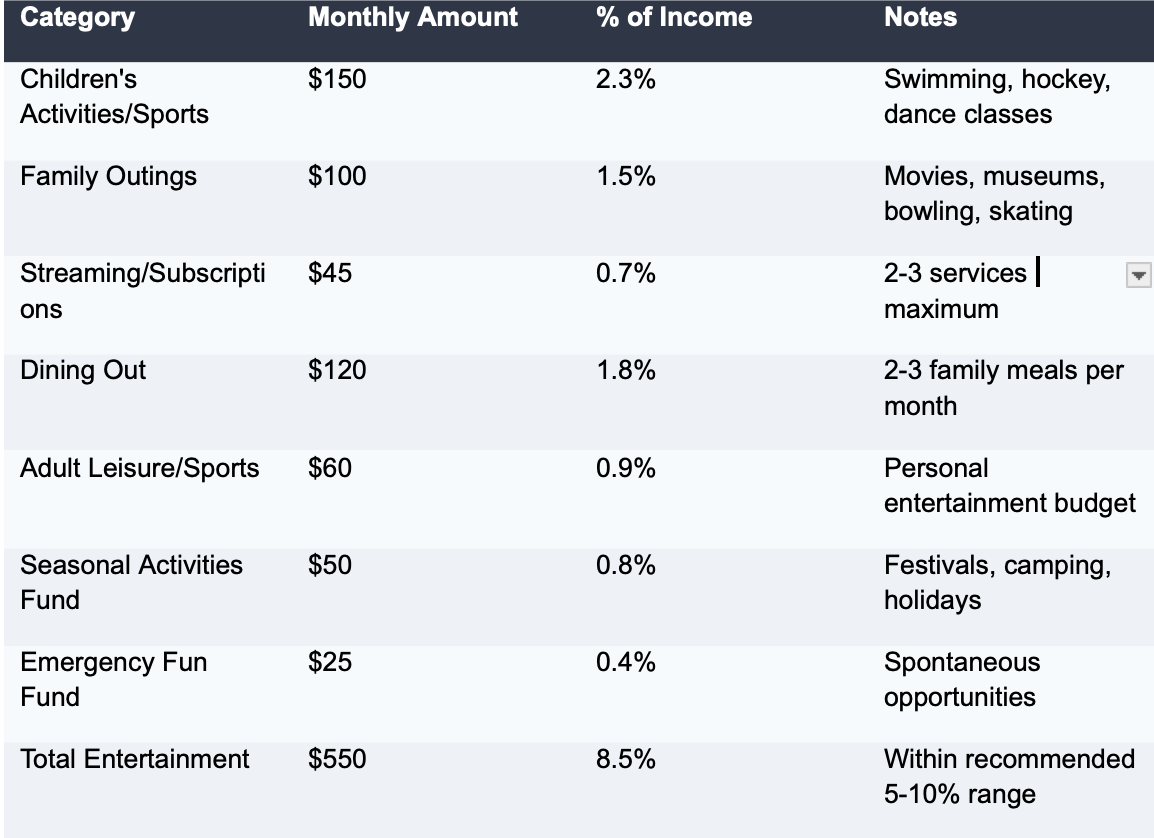
This breakdown is a starting point that families can adjust based on their priorities and circumstances. The important principle is that every entertainment dollar has a designated purpose, which prevents overspending in any single category.
Free and Low-Cost Entertainment in Edmonton
Edmonton offers abundant free and affordable entertainment options that can stretch any family budget further. The city's extensive park system, free festival programming, and community events provide quality family experiences without significant cost. Families looking for affordable indoor entertainment options for families will find that Edmonton has a remarkably diverse range of activities available year-round.The Edmonton Public Library system offers free programming for all ages, from storytime sessions for toddlers to coding workshops for teenagers. River Valley trails provide year-round outdoor recreation, with cross-country skiing and snowshoeing available at no cost during winter months. Summer brings free outdoor concerts, community league events, and splash parks throughout the city.Taking advantage of free community days at attractions like the Royal Alberta Museum, Telus World of Science discount evenings, and Edmonton Oilers community events can provide memorable experiences without straining the budget.

Teaching Children About Money Through Entertainment Choices
Entertainment budgeting provides natural teaching moments for children about financial literacy. When kids participate in spending decisions - choosing between a movie night at home or a trip to the theatre, for example - they develop an understanding of trade-offs and value.
Giving older children a small personal entertainment allowance and letting them manage it independently builds practical money skills. A teenager who learns to save their allowance for a concert ticket understands delayed gratification in a way that abstract lessons cannot teach.
Family budget meetings, held monthly or quarterly, can include children in age-appropriate ways. Younger kids might help choose the family outing for the month, while teenagers might contribute ideas for reducing costs without reducing fun. These conversations normalize financial discussions and prepare children for managing their own budgets as adults.
Building a Comprehensive Household Budget
Entertainment spending exists within the context of overall household finances. Before allocating fun money, families need to ensure that essential expenses - housing, food, transportation, insurance, and savings - are adequately funded. The Financial Consumer Agency of Canada offers excellent government resources for building a household budget that can help families create a complete financial plan.The 50/30/20 rule provides a useful framework: 50 percent of after-tax income for needs, 30 percent for wants (including entertainment), and 20 percent for savings and debt repayment. Edmonton families facing higher heating costs in winter or vehicle expenses for commuting may need to adjust these ratios, but the framework offers a solid starting point.Emergency savings should be established before allocating significant amounts to entertainment. Financial experts recommend having three to six months of essential expenses saved. Once this safety net exists, families can enjoy entertainment spending with less anxiety about unexpected financial shocks.
Seasonal Budgeting Strategies for Edmonton Families
Edmonton's distinct seasons create predictable patterns in entertainment spending that smart budgeting can accommodate. Winter months from November through March typically see higher spending on indoor activities, heating costs, and holiday-related entertainment. Summer months bring festivals, travel, and outdoor activities.
Setting aside a small amount each month for seasonal peaks prevents budget stress. Saving $50 monthly throughout the year creates a $600 fund for summer camping trips or holiday season activities. This approach spreads the cost evenly rather than creating spending spikes that strain the monthly budget.
K-Days, the Heritage Festival, the Fringe Festival, and other Edmonton summer staples can be enjoyed affordably with advance planning. Buying tickets early, packing meals instead of purchasing food at venues, and taking advantage of free programming days all reduce costs without reducing the experience.
Technology Tools for Family Budget Management
Several free and low-cost tools can help families track and manage entertainment spending. Budgeting apps like Mint, YNAB, and Wealthsimple allow families to categorize expenses automatically and set alerts when spending approaches limits.
Shared family calendars help coordinate activities and avoid double-booking that leads to missed prepaid events. Google Calendar or similar tools can include cost notes alongside event details, keeping spending visible and intentional.
For families where both parents want discretionary spending independence, separate personal entertainment sub-accounts within the overall family budget respect individual preferences while maintaining agreed-upon limits. This approach reduces friction around spending decisions and acknowledges that different family members have different entertainment interests.
Frequently Asked Questions
How much should a Canadian family spend on entertainment monthly
Financial advisors recommend spending 5 to 10 percent of after-tax household income on entertainment and recreation. For a family earning $6,500 monthly after taxes, this would be $325 to $650. The exact amount should reflect your family's priorities and financial situation.
What are the best free family activities in Edmonton
Edmonton offers extensive free programming through public libraries, River Valley trails for hiking and skiing, free community events and festivals, splash parks in summer, and regular free admission days at museums and cultural institutions.
How do I talk to my kids about the family entertainment budget
Include children in age-appropriate budget discussions. Let younger kids help choose activities, give older kids small entertainment allowances to manage, and frame choices as trade-offs rather than restrictions. Monthly family meetings about upcoming activities work well.
Should sports betting be part of a family entertainment budget
Any adult leisure activity, including sports betting, should be treated as a fixed line item within the personal entertainment budget - not as a variable or investment category. Set a strict monthly cap, use responsible play tools provided by licensed platforms, and never allocate funds needed for household essentials.
How can families save money on children's sports registration
Look into Canadian Tire Jumpstart grants, KidSport Edmonton funding, community league subsidies, and early-bird registration discounts. Many organizations offer multi-child discounts, and equipment swap programs can significantly reduce gear costs.
Key Takeaways
Track entertainment spending for one to two months to establish an honest baseline before creating a budget.
Allocate 5 to 10 percent of after-tax income to entertainment, categorized into essential and flexible tiers.
Treat every entertainment category - from streaming to adult leisure - as a capped line item with a defined monthly limit.
Edmonton families have access to extensive free and low-cost entertainment through libraries, parks, festivals, and community events.
Involve children in budget conversations to build financial literacy through real-world decision-making about entertainment choices.