Daily Fantasy Sports vs. Sports Betting in Canada
Canadian sports fans have more ways than ever to put their knowledge to the test. Hockey nights, NFL Sundays, and NBA playoff runs now come with two popular options: daily fantasy sports (DFS) and traditional sports betting. Both involve real money and real games, but they work very differently.
How Daily Fantasy Sports Contests Work for Canadians
Daily fantasy sports compress a full fantasy season into a single day or week. You pay an entry fee, draft a lineup of real athletes under a salary cap, and earn points based on their actual statistics. Your results depend on how your roster performs compared to other participants, not on which team wins.
Contest formats vary widely. Head-to-heIce Casino in Canada ad matchups pit you against one opponent, while guaranteed prize pool (GPP) tournaments can include thousands of entries and top-heavy payouts. "50/50" and double-up contests pay roughly half the field, which makes them steadier for beginners. Because you compete against other players, the operator earns money by taking a percentage of entry fees, often called the rake.
Sports Betting in Canada After the Single-Event Change
For decades, Canadians could legally bet only on parlays through provincial lottery products such as Pro-Line. That changed when Bill C-218, the Safe and Regulated Sports Betting Act, took effect on August 27, 2021. It amended the Criminal Code to allow single-event wagers, giving provinces the authority to offer and regulate them.
Ontario went further by launching an open, regulated online market on April 4, 2022, overseen by the Alcohol and Gaming Commission of Ontario and iGaming Ontario. Other provinces rely mainly on government-run platforms such as PlayNow in British Columbia and Manitoba and Mise-o-jeu in Quebec, while Alberta has been moving toward a competitive, Ontario-style framework. Unlike DFS, sports betting puts you against the sportsbook, which builds a margin into its odds. Before signing up anywhere, compare licensing, payment options, and bonus terms, whether you're checking a provincial site or browsing an option like Ice Casino in Canada.
Key Differences Between Fantasy Contests and Wagers
Although both formats reward sports knowledge, the mechanics, risks, and rewards differ in meaningful ways.
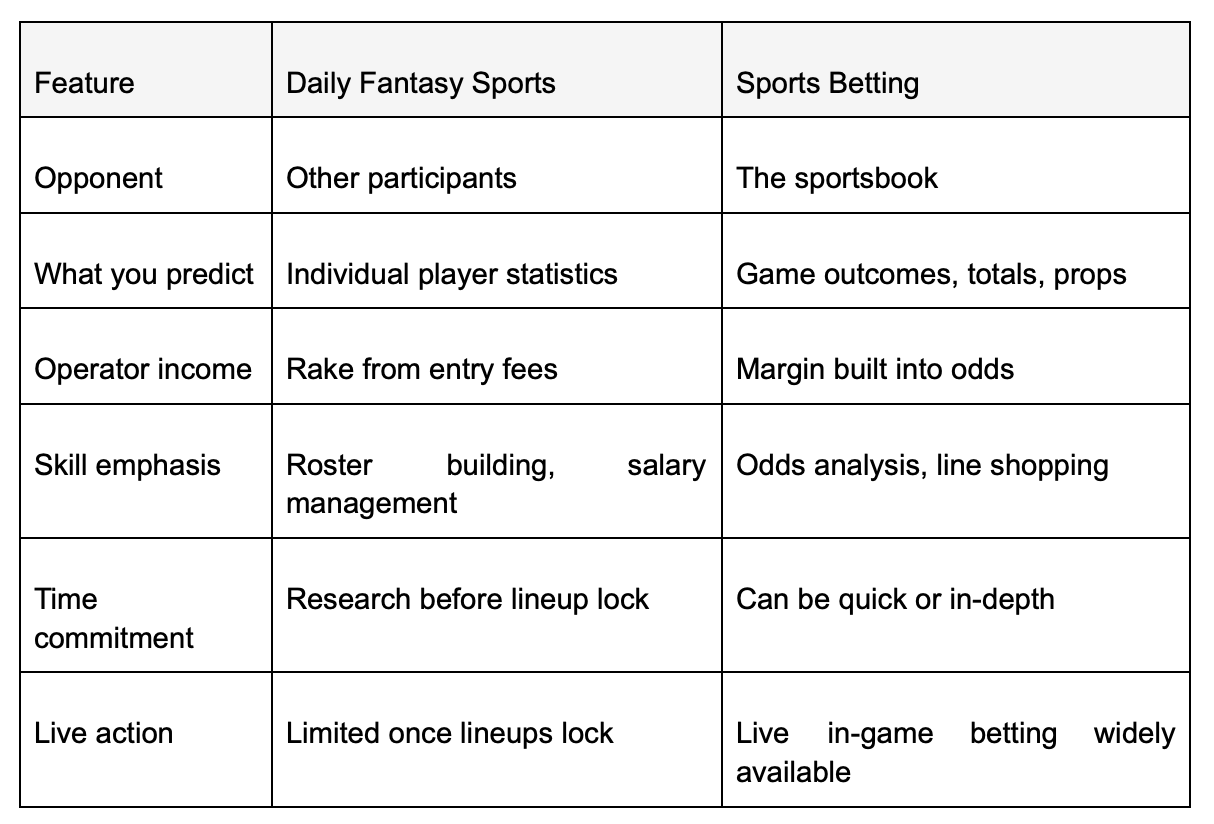
DFS feels like a strategy game, while betting offers faster, more flexible action.
Choosing the Format That Matches Your Sports Knowledge
Neither option is objectively better; the right choice depends on how you like to engage with sports. Some fans enjoy digging into player matchups, injury reports, and projected minutes. Others prefer reading team trends and spotting value in a moneyline or puck line.
When Daily Fantasy Sports Make More Sense for You
DFS rewards detailed preparation and an eye for undervalued players. If you already follow fantasy leagues or track advanced stats, the jump to daily contests feels natural. You also stay invested in many games at once, since your lineup spreads across multiple matchups. Because entry fees are fixed, budgeting is simple and predictable.
When Traditional Sports Betting Is the Better Choice
Sports betting suits fans who want direct opinions on outcomes rather than player stat lines. If you believe the Maple Leafs will cover against a division rival, a single wager expresses that view instantly. Betting also offers more markets, including live odds that shift during play. To decide which path fits you, ask yourself a few practical questions:
Do you enjoy building rosters more than predicting final scores?
How much time can you realistically spend on research each week?
Do you prefer competing against people or against posted odds?
Would you rather have fixed costs or flexible stake sizes?
Is live, in-game action important to your enjoyment?
Responsible Play Tips for Fantasy Players and Bettors
Both DFS and sports betting carry financial risk. Set a monthly budget and treat it as entertainment spending, not an investment. Avoid chasing losses with bigger lineups or larger wagers after a bad night. Most regulated Canadian platforms provide deposit limits, time reminders, and self-exclusion tools, so use them early.
Remember that the legal age for gambling is 19 in most provinces and 18 in Alberta, Manitoba, and Quebec. If gaming stops feeling fun, provincial support services such as ConnexOntario and the Responsible Gambling Council offer free, confidential help.
Picking Your Side of the Canadian Sports Action
Daily fantasy sports and sports betting both turn your passion for the game into an interactive experience, but they test different skills. DFS focuses on player performance and lineup strategy against other fans, while sports betting centres on outcomes and odds set by the house.
Try the format that matches your interests, start with small stakes, and stay within your limits. Whichever you choose, informed decisions and disciplined bankroll habits will make every game night more enjoyable.