Manual vs Electric Balloon Pumps: Which One Do You Really Need?
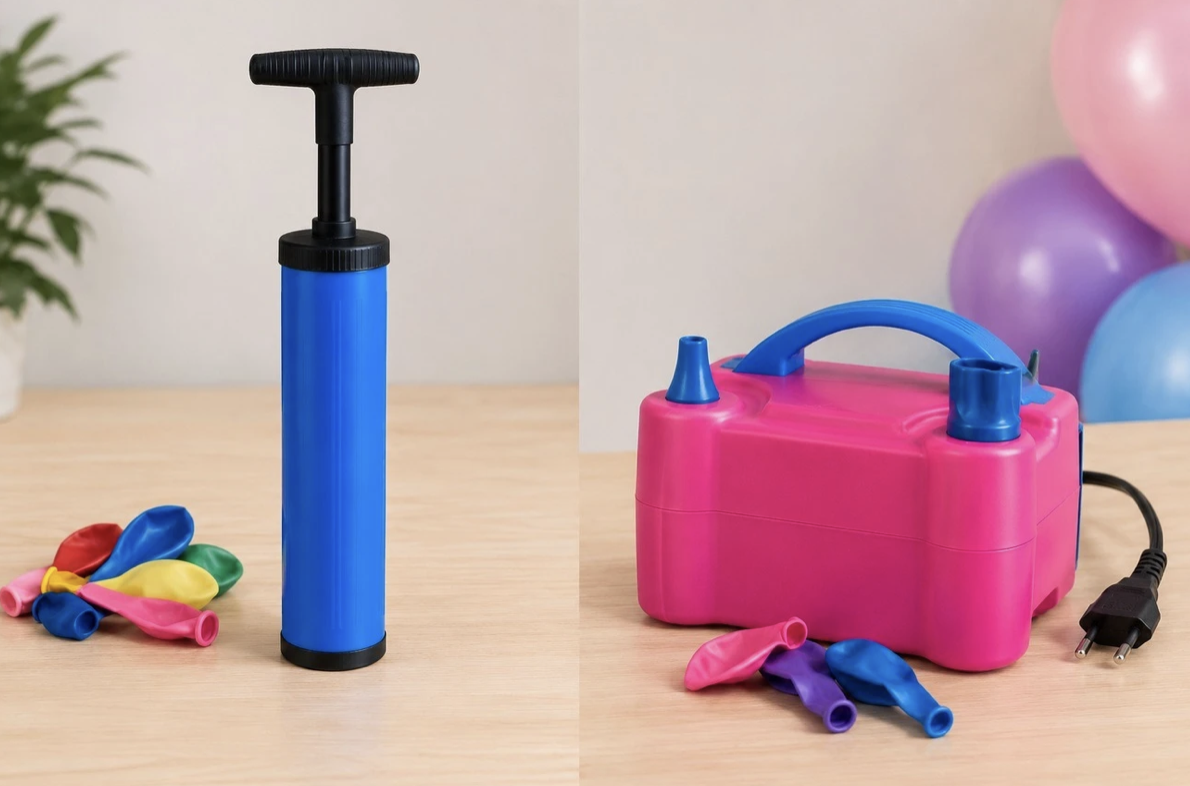
Inflating balloons sounds like one of the simplest parts of decorating, until you have several dozen balloons waiting to be prepared. A small birthday setup might be manageable with a basic hand pump, while a large garland or event installation can turn balloon inflation into one of the most time consuming parts of the job.
The choice between a manual and electric pump comes down to more than speed. Portability, noise, power access, the number of balloons you usually inflate, and how often you decorate all play a role. Understanding these differences makes it easier to choose equipment that actually fits the way you work.
Manual Balloon Pumps: Simple and Portable
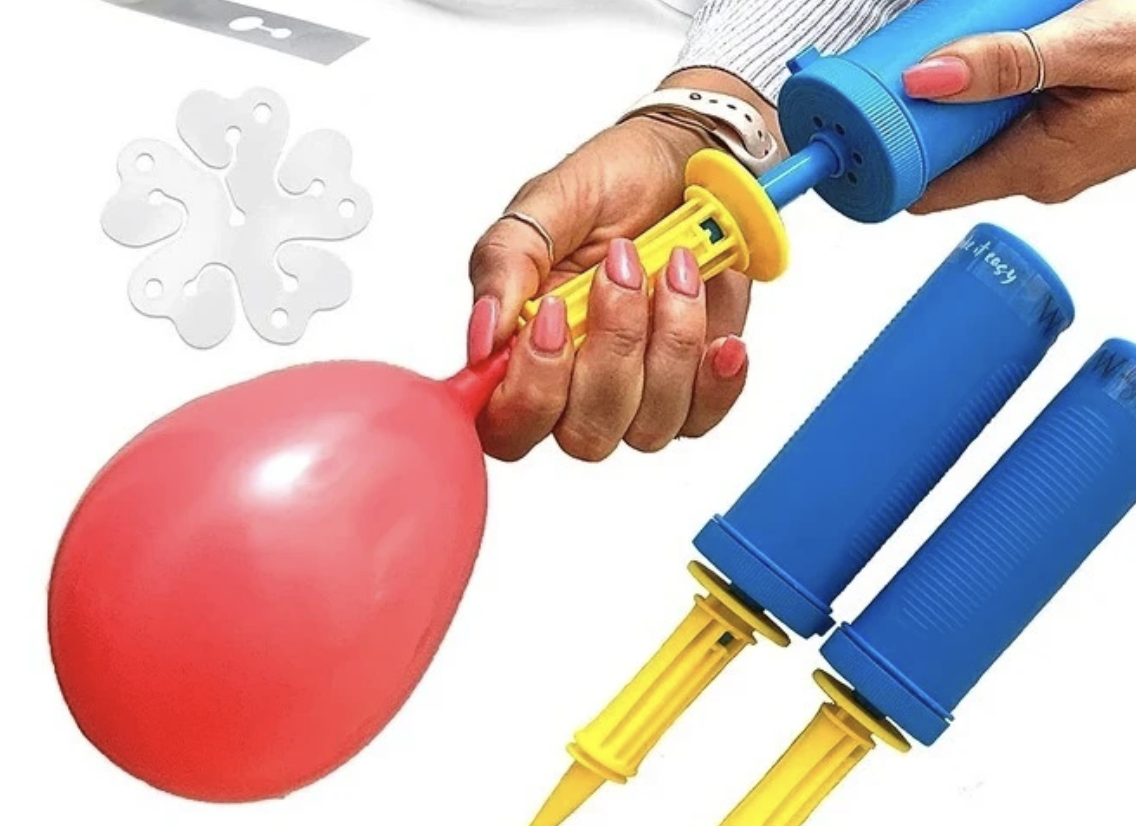
A manual balloon pump is the most straightforward option. It works without electricity and is small enough to keep in a decoration kit, drawer, or storage box.
For occasional decorators, that simplicity is a major advantage. There is no cable to manage, no outlet to find, and no motor to maintain. A manual pump can be taken to a park, outdoor party, wedding venue, or any other location without worrying about access to electricity.
Many manual pumps are designed with a dual action mechanism, meaning they move air during both the push and pull strokes. This makes them noticeably faster than basic single action pumps and more practical when inflating several balloons.
Manual pumps are particularly suitable for:
Small birthday parties and family celebrations
Simple balloon arrangements and small garlands
Outdoor events where electricity may not be available
Emergency or backup equipment for professional decorators
Decorators who only inflate balloons occasionally
A good manual pump is also inexpensive compared with powered equipment. For someone who only needs to inflate a few balloons at a time, spending more on an electric pump may not provide much practical benefit.
Electric Balloon Pumps: Speed for Larger Decorations
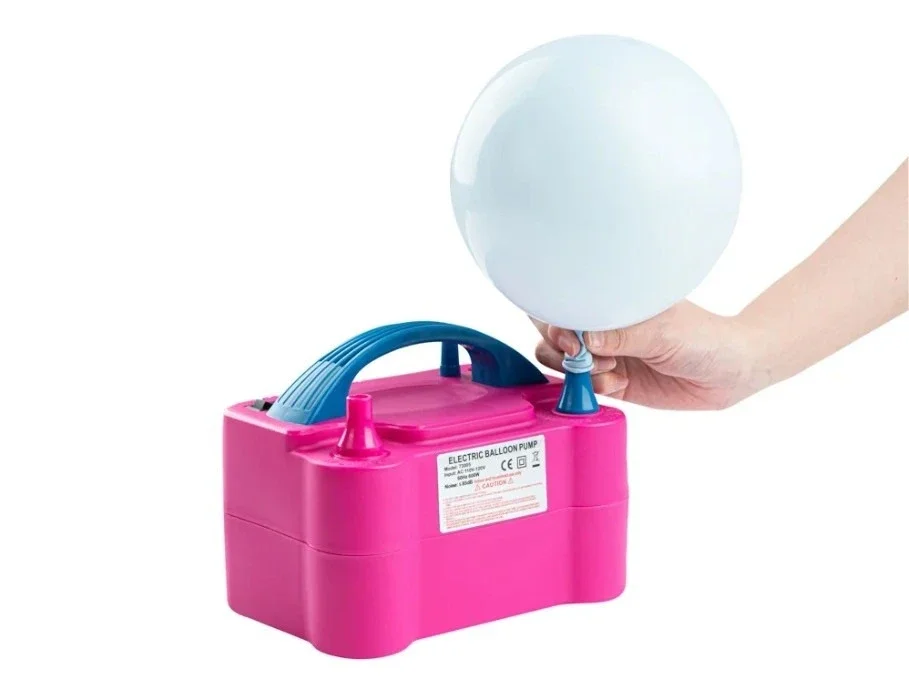
Electric pumps are designed for situations where a large number of balloons need to be inflated quickly. They are particularly useful for balloon garlands, arches, columns, walls, and other installations that can require dozens or even hundreds of balloons.
The biggest advantage is obvious: speed. Instead of repeatedly moving a handle, the user places the balloon over the nozzle and lets the pump supply the airflow. This can make a major difference during event preparation.
For anyone regularly working with balloon pumps, electric models can also reduce the physical effort involved in preparing large quantities of latex balloons.
Electric pumps are a practical choice for:
Large balloon garlands and arches
Professional event decoration
Weddings and corporate events
Party businesses preparing multiple orders
Large installations that need to be completed within a limited setup window
The main drawback is that electric pumps need a power source, depending on the model. They are also generally louder than manual pumps. This is rarely an issue during preparation, but it can matter when working in a quiet venue or in a customer facing environment.
Manual vs Electric: What Is the Real Difference?
The easiest way to compare the two is to consider how each one affects the decorating process.
A manual pump offers maximum portability and simplicity. It is always ready to use and does not depend on electricity. The trade-off is that your hands and arms provide the work, so the process becomes tiring as the number of balloons increases.
An electric pump moves the work from your muscles to the machine. This makes large quantities much easier to handle, but the equipment is less portable and requires access to power.
For a small event, the difference may not matter much. If you need to inflate 10 or 20 balloons, a manual pump can get the job done without much trouble. Once the quantity becomes much larger, the time and effort saved by an electric model become more noticeable.
Which Pump Is Better for Balloon Garlands?
Balloon garlands are one of the clearest examples of where pump choice matters.
A small garland made from a limited number of balloons can be prepared with a manual pump. It may take longer, but there is no need for additional equipment.
Larger organic garlands are different. They often use multiple balloon sizes and require a significant number of individual balloons. Inflating all of them by hand can become repetitive and tiring, particularly when the garland is only one part of a larger event setup.
An electric pump is usually more convenient for this type of work because it allows the decorator to prepare balloons much faster. A manual pump is still useful for adjustments and as a backup.
What About Balloon Size and Type?
The type of balloon also affects which pump makes sense.
Standard latex balloons are compatible with most manual and electric balloon pumps. Smaller balloons can require more attention because it is easy to inflate them beyond the desired size when using a fast electric pump.
Large latex balloons can also be inflated with an electric pump, but they require attention during inflation because their final size can vary depending on the balloon design and the amount of air used.
Twisting balloons and other specialty shapes may require a suitable nozzle or a different inflation technique. Before buying a pump, check that the nozzle design works with the balloon types you use most often.
Do You Really Need an Electric Pump?
Not necessarily.
If you decorate occasionally and usually work with a small number of balloons, a good manual pump may be all you need. It is inexpensive, portable, and easy to keep available whenever a celebration comes up.
An electric pump becomes more useful when balloon decoration is a regular activity. If you repeatedly prepare large garlands, arches, backdrops, or event installations, faster inflation can save considerable preparation time and reduce physical fatigue.
For professional decorators, having both can be the most practical arrangement. The electric pump handles the main workload, while the manual pump stays available for outdoor jobs, quick adjustments, and situations where electricity is unavailable.
How to Choose the Right Pump for Your Needs
Before buying, think about how you actually decorate rather than choosing based only on the equipment's specifications.
Occasional small parties: a manual pump is usually sufficient.
Medium sized decorations: a dual action manual pump or electric pump can work well.
Large garlands and arches: an electric pump will save considerable time.
Professional event work: an electric pump is useful for regular high volume preparation.
Outdoor or mobile decorating: keep a manual pump available even if you mainly use an electric model.
It is also worth considering storage and transport. A manual pump takes very little space and can remain in a decoration bag permanently. An electric model needs more room and may require cables or other accessories, depending on the design.
The Best Choice Depends on Your Workload
There is no universal winner between manual and electric balloon pumps. A manual model is convenient, inexpensive, portable, and perfectly capable of handling smaller jobs. An electric pump makes more sense when speed and volume become important.
For occasional decorating, start with a quality manual pump. If you regularly find yourself spending too much time inflating balloons, upgrading to an electric model can make the preparation process much easier. And for professional decorators, keeping both types available provides the flexibility to handle almost any setup.