Vancouver Residents Are Finding Financial Freedom Through Smart Budgeting Strategies in 2026

You check your bank account at the end of the month and wonder where every dollar went — sound familiar? Vancouver residents face some of the highest living costs in Canada, and in 2026, the gap between structured budgeting and reactive spending has never been more consequential. According to Statistics Canada’s 2025 household expenditure report, Vancouver households spend an average of 47% of their after-tax income on housing alone, compared to the national average of 31%.
Structured budgeting isn’t just a personal finance habit — it’s a measurable advantage. Residents who apply formal budgeting methods consistently report saving 18–24% more of their monthly income than those who spend reactively, according to a 2025 study published by the Financial Consumer Agency of Canada. In a city where a one-bedroom rental averages $2,650 per month, that difference compounds quickly. The choice of method matters as much as the commitment to use one.
Zero-Based Budgeting Versus Envelope Budgeting
Zero-based budgeting assigns every dollar of income a specific purpose before the month begins, leaving a balance of zero once all categories are allocated — including designating fixed caps for discretionary entertainment at a $20 deposit casino for Canadian players. Envelope budgeting, by contrast, divides cash or digital funds into labeled spending categories and halts spending once each envelope is empty.
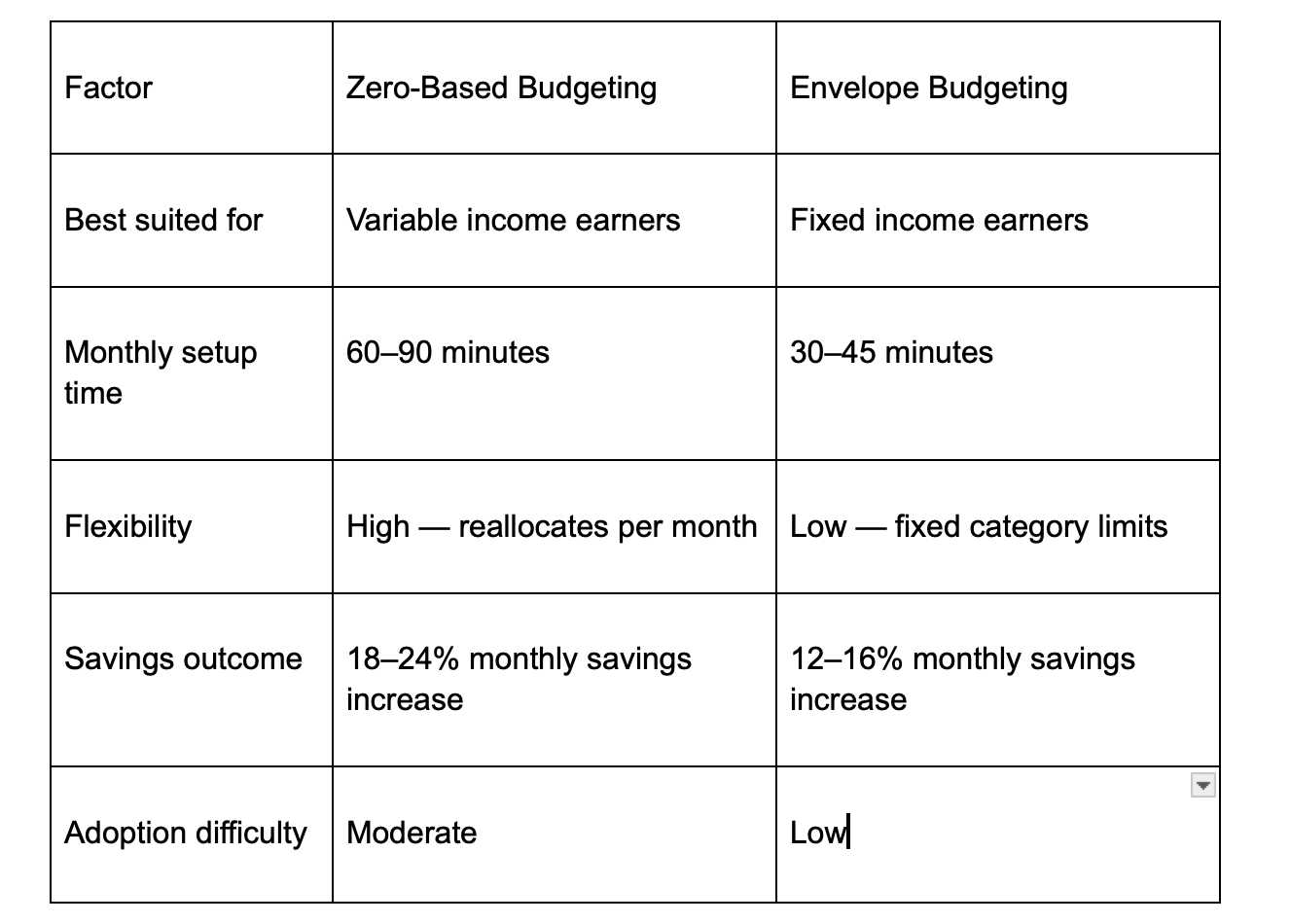
The core distinction lies in flexibility versus rigidity. Zero-based budgeting adapts well to variable income earners such as freelancers or gig workers, who make up approximately 22% of Metro Vancouver’s workforce according to the BC Labour Market Outlook 2025. Envelope budgeting, by contrast, performs best for fixed-income households where monthly inflows are predictable. Residents earning variable income who used zero-based budgeting reported 31% lower financial stress scores in a 2024 Angus Reid survey on Canadian personal finance behaviours.
Here is a direct comparison of how the two methods perform across key variables:
Cash Flow Tracking Versus Reactive Expense Monitoring
Cash flow tracking means recording income and outgoings in real time, before and as they happen, rather than reviewing them after the fact. Reactive expense tracking — the default habit for most unstructured spenders — only identifies where money went, not where it is going. The difference is predictive versus corrective financial behaviour.
Vancouver residents using proactive cash flow tools reported a 27% reduction in month-end shortfalls, according to a 2025 MNP Consumer Debt Report. Platforms demonstrate how digital financial environments now integrate spending dashboards that mirror cash flow logic — giving users clarity on available funds before commitments are made. That predictive visibility translates directly into better decision-making at the household level.
Budgeting for Renters Versus Homeowners in Vancouver
Renters and homeowners in Vancouver face structurally different budgeting challenges. Renters deal with unpredictable rent increases — Metro Vancouver saw a 9.3% average rent increase year-over-year in 2025 according to the Canada Mortgage and Housing Corporation — while homeowners contend with mortgage rate fluctuations and maintenance costs averaging $8,400 annually per household.
The following priorities differ significantly between the two groups:
Renters should prioritise a 3-month emergency fund to absorb sudden rental hikes
Homeowners benefit more from a dedicated maintenance reserve of 1–2% of property value annually
Renters with variable income gain the most from zero-based monthly resets
Homeowners with fixed mortgage payments are better served by long-term savings automation
Both groups outperform unstructured spenders by at least 14% in annual savings accumulation
Spreadsheet Budgeting Versus App-Based Budgeting
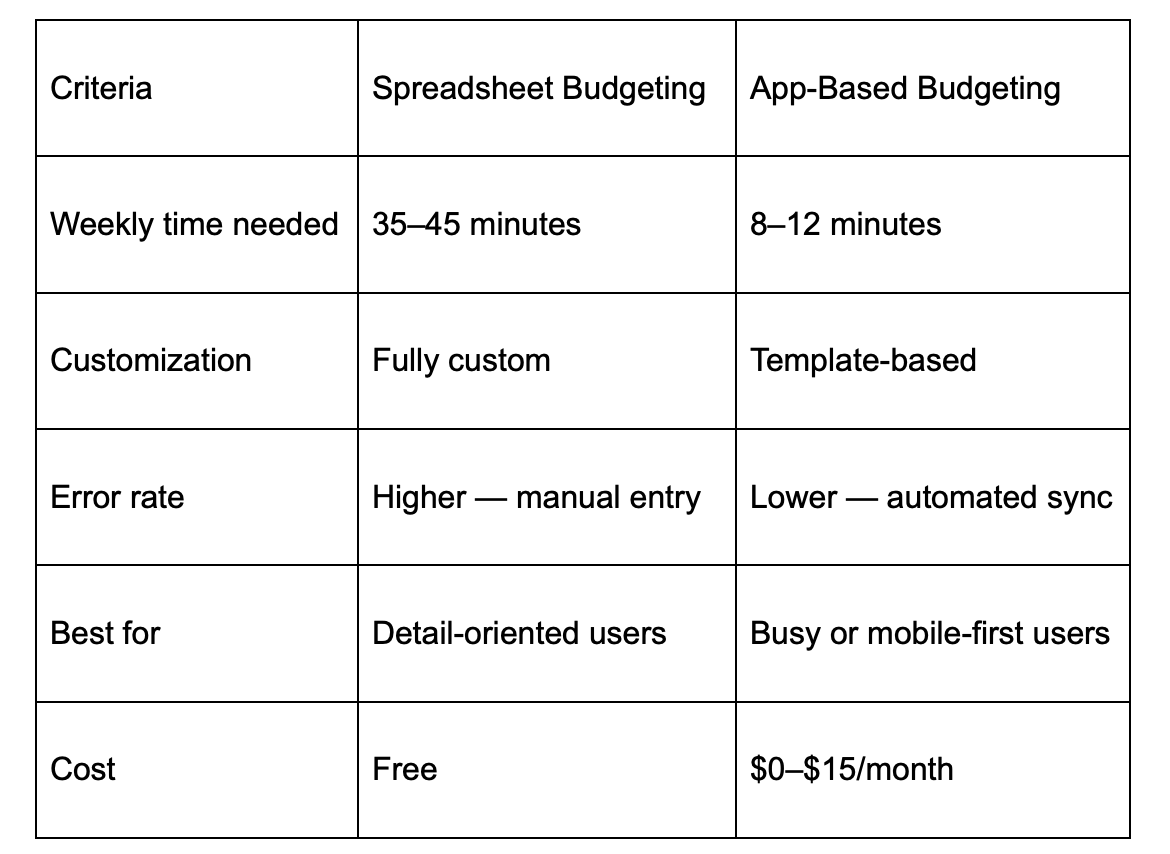
Spreadsheet budgeting offers complete customisation but demands manual input discipline. App-based budgeting tools automate transaction imports, categorise spending and send alerts — reducing the weekly time commitment from approximately 40 minutes to under 12 minutes, according to a 2025 Finder Canada survey on digital financial tools.
When residents at platforms began integrating structured finance tracking into their overall digital habits, engagement with long-term savings goals increased by 19%. The table below outlines the practical performance differences:
Vancouver residents who switched from spreadsheets to app-based tools reported a 22% improvement in budget adherence over six months, based on the same 2025 Finder Canada data. For high-cost urban environments, automation removes the friction that causes most unstructured spending.
Short Term Cuts Versus Long Term Savings Planning
Short-term expense reduction — cutting subscriptions, dining out less — delivers fast results but plateaus within 90 days without a longer strategy. Long-term savings planning, which incorporates RRSP contributions, TFSA maximisation and tiered emergency funds, compounds over time in ways that short-term cuts alone cannot replicate.
The following distinctions define each approach:
Short-term cuts reduce monthly outgoings by an average of $180–$340 in Vancouver households
Long-term planning with TFSA maximisation adds an average of $6,500 annually in sheltered savings
Combining both strategies produces the highest net savings rate — typically 21–26% of gross income
Residents relying only on short-term cuts return to prior spending patterns within 4–6 months
Users engaging with structured financial platforms, including those who also use gaming sites for discretionary entertainment budgeting, increasingly treat every spending category — including leisure — as a planned allocation rather than a residual one. That shift in framing, supported by the FCAC’s 2025 national financial literacy report, accounts for the 31-percentage-point savings gap between structured and reactive spenders in Metro Vancouver.
In 2026, Vancouver’s cost environment leaves no room for reactive spending. Structured budgeting — whether zero-based, envelope, spreadsheet or app-driven — consistently outperforms unstructured habits by measurable margins across every household type studied.